Skin structure: Functions and structure of the skin layers explained
The skin consists of three tightly connected layers. It forms a natural protective barrier against harmful environmental influences and pathogens. It is also important for sensory perception – for example, temperature, touch or pain. And last but not least, the skin shapes our outward appearance. True beauty and a natural radiance are therefore always a question of healthy skin.
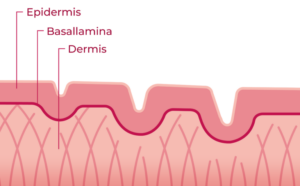
The following illustration shows a cross-section of the skin with its most important layers:
At the top is the epidermis (outer skin), below which is the basal lamina, which acts as a separating layer to the deeper dermis (corium).
Skin structure and the central role of the dermis
The dermis forms the structural framework of the skin. It consists mainly of a dense network of collagen fibres, which are responsible for firmness and smoothness. Between the collagen and elastin fibres lie fibroblasts – specialised cells that produce collagen, elastin and hyaluronic acid. Hyaluronic acid acts as a moisture reservoir by binding water in the extracellular matrix, thus supporting the volume and suppleness of the skin.